Description
Dr. Eugene D. Stanislaus of Brooklyn Heights Dental explains how tooth implants restore chewing efficiency comparable to natural teeth, far surpassing the limited function of removable dentures. He walks through the placement process, the option for immediate temporary teeth in high-esthetic areas, and the bone grafting techniques used to prepare patients with bone deficiencies. With proper placement and care at Brooklyn Heights Dental, dental implants can last a lifetime.
View transcript
Dr. Eugene D. Stanislaus:
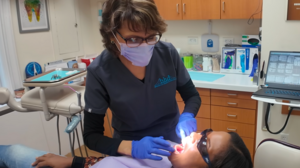
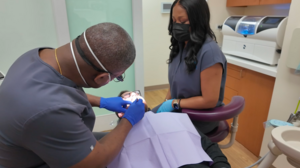
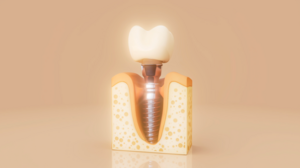
Dental implants are probably the most advantageous aspect of replacing missing teeth. When patients have a denture, removable denture, dentures only provide about 10% of chewing efficiency compared to natural teeth, whereas dental implants actually have a chewing efficiency similar to that of a natural tooth. First of all, patients need an injection. Generally, we will make an incision in the gum tissue to expose the underlying bone. Once we do that, there's a process, it's a drilling sequence, which we use depending on the length and the width of dental implants.
Once we determine the length and the width, then we know the exact implant that we need. Once the implant is placed, generally we'll wait a certain amount of time to allow the implant to heal within the bone. However, there are circumstances where we put implants in, and we put a tooth in immediately. Generally, we do that in high esthetic areas. In the front, in the mouth, we put a dental implant, and we certainly don't want the patient to leave with a space. Generally, with respect to implants, like I said, implants placed in the back of the mouth, we generally will wait for those implants to heal within the bone.
If it's in the front, using certain principles that won't put too much stress the implant, we'll put an immediate temporary. Dental implants can last an indefinite amount of time. Once a dental implant is placed, if it's done properly, and also provided the patient's take care of it. Dental implants can last as long as a natural tooth. Dental implants, according to the literature, have a 90 to 95% success rate. That success, they don't survive, but they actually succeed and patients are able to use them, and they look and function just like natural teeth.
Dental implants, once they're placed, they function and look just like natural teeth. The chewing efficiency that someone will achieve with a dental implant exceeds that of alternatives, which most alternatives are removable dentures. They really have about 10% of the chewing efficiency of natural teeth, whereas dental implants actually give a chewing efficiency similar to natural teeth, if not more. Procedures started dental implant is just like procedure to have a filling, a root canal, gum surgery. You have to get the patient numb. Once a patient's numb, dental implants go as smoothly as a filling, a root canal, gum surgery, and patients are always amazed at how little pain they felt based on what they were expecting.
Dental implants can pretty much be used on any patient. With respect to the titanium, really patients have to have enough height and enough width of bone. If they don't have the adequate height and width of bone, we're able to create that. We're able to do the process of bone graphing, soft tissue graphing. We, in most cases, can prepare a patient with deficiencies. We can prepare them to have dental implants.