Description
Dr. Eugene D. Stanislaus of Brooklyn Heights Dental explains how periodontitis develops from plaque buildup into a serious bacterial infection that can damage gum tissue and bone. He walks through how the condition is diagnosed using periodontal pocket depth and outlines treatment options including bone grafting and the advanced LANAP laser procedure. Once treated, patients return to Brooklyn Heights Dental every three months for the cleanings needed to keep periodontitis under control.
View transcript
Dr. Eugene D. Stanislaus:
Gum disease is a bacterial infection, plaque which is a coating of the teeth that forms within 24 hours. Generally, brushing and flossing generally will minimize the effect of plaque. If the plaque is allowed to stay on the teeth for an extended period of time, bacteria tend to form, and it's really the bacteria present in the plaque that causes the breakdown of the gum tissue, as well as the bone.
There are different phases of gum disease. There's early type of gum disease, which is called gingivitis. Gingivitis can usually be treated by a dental cleaning. Then the process of periodontal disease can progress to a point where the gums become inflamed, they bleed when patients brush.
After that, the bacteria can now infect the bone. Once the bacteria start infecting the bone, develop bone loss, teeth become loose, patients have trouble chewing, and have trouble functioning. There's pain and infection. As gum disease progresses to gingivitis, patients will start developing bleeding on brushing and flossing, bleeding when you get into cleaning.
In order to diagnose gum disease, pretty much we're looking at the connection of the gum tissue to the roots of the teeth. It's really the depth of that connection that is indicative of the level of gum disease. Areas that have gum infection develop a pocket. We call it a periodontal pocket, and it's really the depth of the pocket that indicates the level of disease. A periodontal pocket that's 4 to 5 millimeters will indicate generally early periodontal disease. As the pocket depth increases, so does the level of disease.
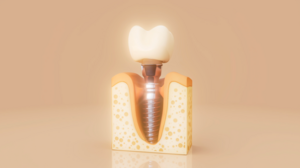
When someone develops periodontal disease, it can never be cured. Our goal is to arrest them. Once you start losing bone and soft tissue, the only way that we can address that… There are certain techniques in which we can use in order to treat periodontal disease. We can restore the bone using several bone grafting techniques.
Bone grafting techniques could be taking some of the patient's natural bone and placing it into the periodontal defect, or there are also other aspects of bone that we use. Could be cadaver bone. Could be synthetic bone. Once gum treatment is performed, we generally require patients to come back every three months in order to pretty much to just clean the teeth, try to remove the bacteria that's on the teeth, and try to prevent the pocket depths from becoming deeper.
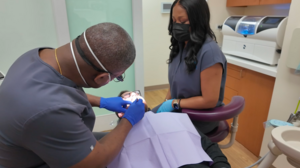
Here in Brooklyn Heights Dental, we use a procedure called LANAP. It stands for laser-assisted new attachment procedure. In that procedure, we use a laser in order to make a space between the gum tissue and tooth. That space provides an environment where we can get narrow, sharp instruments down into the pocket to remove any plaque or any part of the stem.
Once we perform that aspect, we use the laser in order to remove the inflamed gum tissue. Pretty much we'll bring the gum tissue, make the gum tissue less prominent. Once we do that, we use the laser in order to create a blood clot that will allow new bone to form.
Gum treatment, once it's done, can be maintained. One of the most significant aspects of maintaining it, patients have to come back for frequent dental recalls. Have to come back for frequent cleanings. We'll take X-rays to make sure that the treatment that we've performed is maintained.